
Most haircare questions at the checkpoint come down to format, not product. Shampoo and dry shampoo are both for your hair. One is a liquid under TSA rules. The other is an aerosol, and that changes everything about how you pack it. Understanding the distinction takes about two minutes and saves you from losing something at the conveyor belt.
This guide covers haircare and body wash specifically. For the full liquid rule framework, see our [TSA Liquid Rules 2026 guide].
Shampoo and Conditioner in Your Carry-On
Both shampoo and conditioner are liquids under TSA rules. They must be in containers of 3.4 ounces (100ml) or less and fit inside your single quart-sized clear bag alongside your other liquid toiletries.
The detail most people miss: TSA checks container size, not how full the bottle is. A mostly empty 8oz bottle of conditioner still gets confiscated. If you're traveling carry-on only, buy travel-size bottles in advance or decant into reusable containers before you leave. Not at the last minute in the hotel bathroom on the way home.
In checked luggage, there are no size restrictions. Full-size bottles travel without issue.
One alternative worth knowing: solid shampoo bars are not liquids. They don't belong in your clear bag and have no size restriction in carry-on. If you regularly travel without checking a bag, a shampoo bar is one of the cleanest simplifications you can make to your routine.
Body Wash and Face Wash
 Body wash and face wash are liquids, and the same rule applies. Containers of 3.4 ounces (100ml) or less in your carry-on clear bag, any size in checked luggage.
This catches people off guard with face wash specifically. Micellar water, cleansing oil, gel cleanser, foam cleanser: all of these are liquids regardless of how they feel or how you use them. If it can be squeezed, pumped, or poured, it goes in the bag.
For a one-week carry-on trip, a single 100ml bottle of a multipurpose cleanser that works on both face and body is often enough. It's a small trade-off that frees up meaningful space in your quart bag for everything else competing for that same liter of room.
Dry Shampoo: The Rule Most Travelers Don't Know
 Dry shampoo in a spray can is classified as an aerosol, and aerosols have rules beyond the standard liquid limit.
In your carry-on, the 3-1-1 rule still applies: 3.4 ounces (100ml) or less, inside your clear bag. A standard full-size can of dry shampoo runs 150ml to 200ml. It doesn't go in carry-on regardless of how much product is left in the can.
In checked luggage, aerosols are permitted but subject to quantity limits set by the FAA. No single aerosol container can exceed 18 ounces (500ml), and your total aerosol toiletries across the whole bag cannot exceed 70 ounces (2kg). For a typical traveler carrying a hairspray and a dry shampoo, this is not a problem. It becomes relevant if you're checking several large cans.
There is one version of dry shampoo that travels freely without any of this: powder dry shampoo. It is not an aerosol, it is not a liquid, and it can go in your carry-on outside the clear bag with no size restriction. If dry shampoo is essential to your routine and you often travel carry-on only, the powder format is worth switching to.
For the full picture on aerosols in checked baggage, see our [TSA Banned Products: What You Can and Can't Bring in 2026].
Leave-In Conditioner, Hair Oil, and Liquid Styling Products
Leave-in conditioner, hair oil, heat protectant, and liquid styling serums are all liquids. The same carry-on rule applies: 3.4 ounces or less, in the clear bag.
Hair oil specifically tends to get packed in unlabeled dropper bottles. TSA doesn't ask what's in the bottle. They look at volume. If you decant into a small dropper, make sure it's 100ml or under and clearly labeled, particularly on international routes where security checks can be more detailed.
This is also where the quart bag fills up fast. A four-step haircare routine of shampoo, conditioner, leave-in, and oil, plus skincare and anything else liquid you carry, quickly exceeds what fits in one quart bag. Solid formats exist for most of these now: shampoo bars, conditioner bars, solid hair masks, wax-based styling products. Switching even one or two items to solid reduces the pressure considerably.
What Size Hair Products Can You Bring on a Plane?
For carry-on: any container 3.4 ounces (100ml) or less. For checked luggage: any size, no limit. The rule applies to the container volume, not the amount of product remaining inside.
Full-Size Bottles in Checked Luggage
Standard shampoo, conditioner, and body wash in full-size bottles are permitted in checked luggage without restriction. The only haircare products with specific checked-bag limitations are aerosols over 18oz and anything classified as a hazardous material, which standard toiletries are not. If you're checking a bag, pack whatever size you actually use at home.
Packing Your Kit Without Sacrificing Your Quart Bag
 The quart bag is the constraint that forces the real decisions. Most travelers are managing both skincare and haircare competing for the same liter of space, and something usually loses.
The approach that works: reserve the quart bag for what has no solid alternative. Anything that comes in a solid or powder format, like a shampoo bar, conditioner bar, or powder dry shampoo, travels outside the bag entirely. That frees the limited clear-bag space for the items you genuinely cannot swap out.
What remains is a small kit of liquids: a conditioner, perhaps a leave-in, a face wash, and a separate home for the rest of your hair essentials. The powder dry shampoo, the shampoo bar, the small hair tool you're carrying.
The Solid Swap List: What Actually Exists Now
The solid haircare category has matured considerably. Shampoo bars now cover everything from clarifying to moisture-rich formulas, and most major pharmacy brands carry travel-friendly options. Conditioner bars work the same way, and no rinse-off is required for leave-in versions. Solid hair masks exist, though they're less common.
For styling, wax-based pomades and balms are solids by definition and have always traveled freely. The one product that hasn't made a convincing transition to solid format yet is heat protectant. If that's non-negotiable for you, it stays in the quart bag. Everything else in a standard haircare routine now has a solid equivalent worth considering before your next carry-on-only trip.

Keeping your non-liquid hair essentials separate from your quart bag isn't just a TSA strategy. It's a packing system. Everything you pull out at the checkpoint and put back in should have a designated place, so the whole ritual takes thirty seconds instead of three minutes of repacking on a busy security floor.
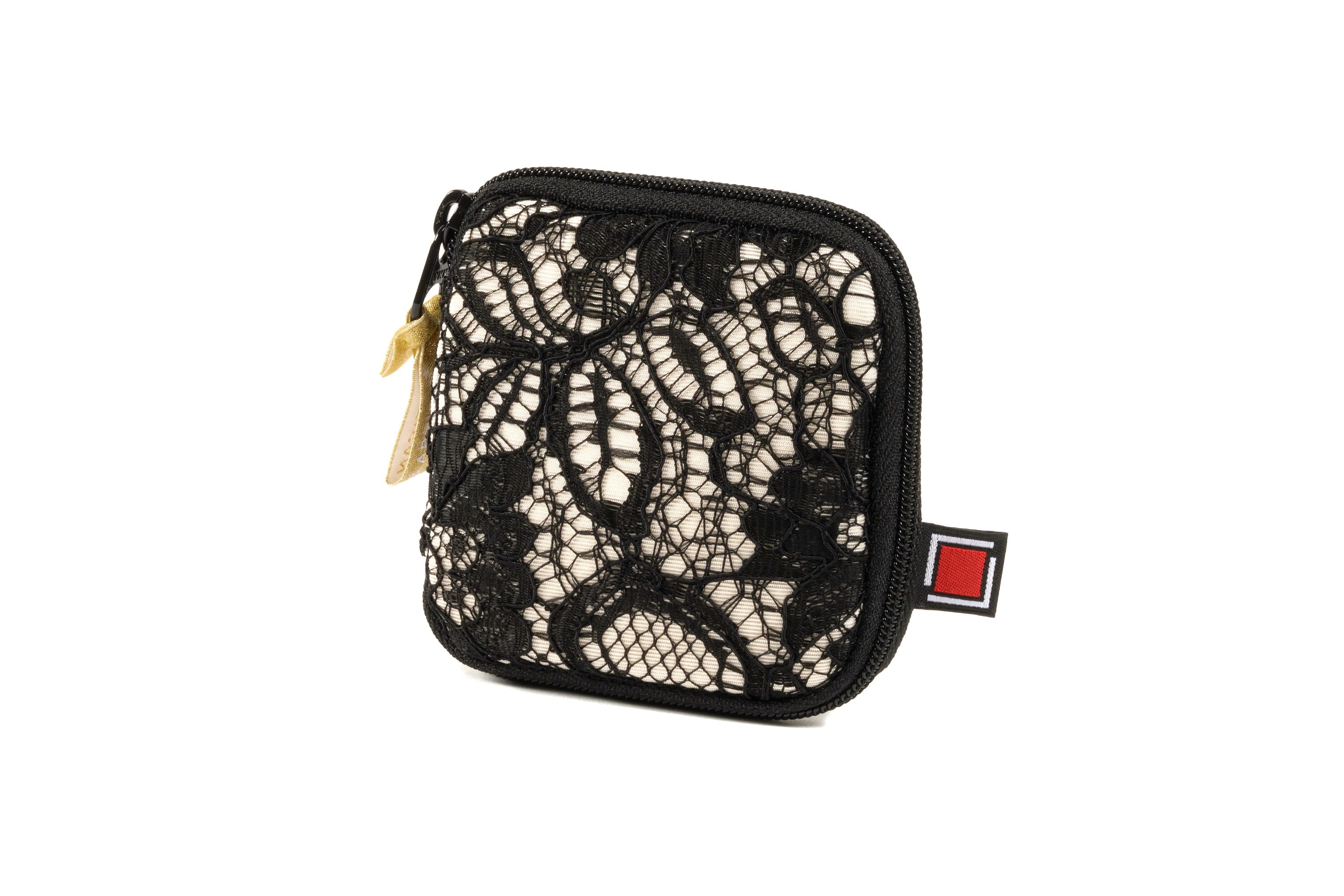
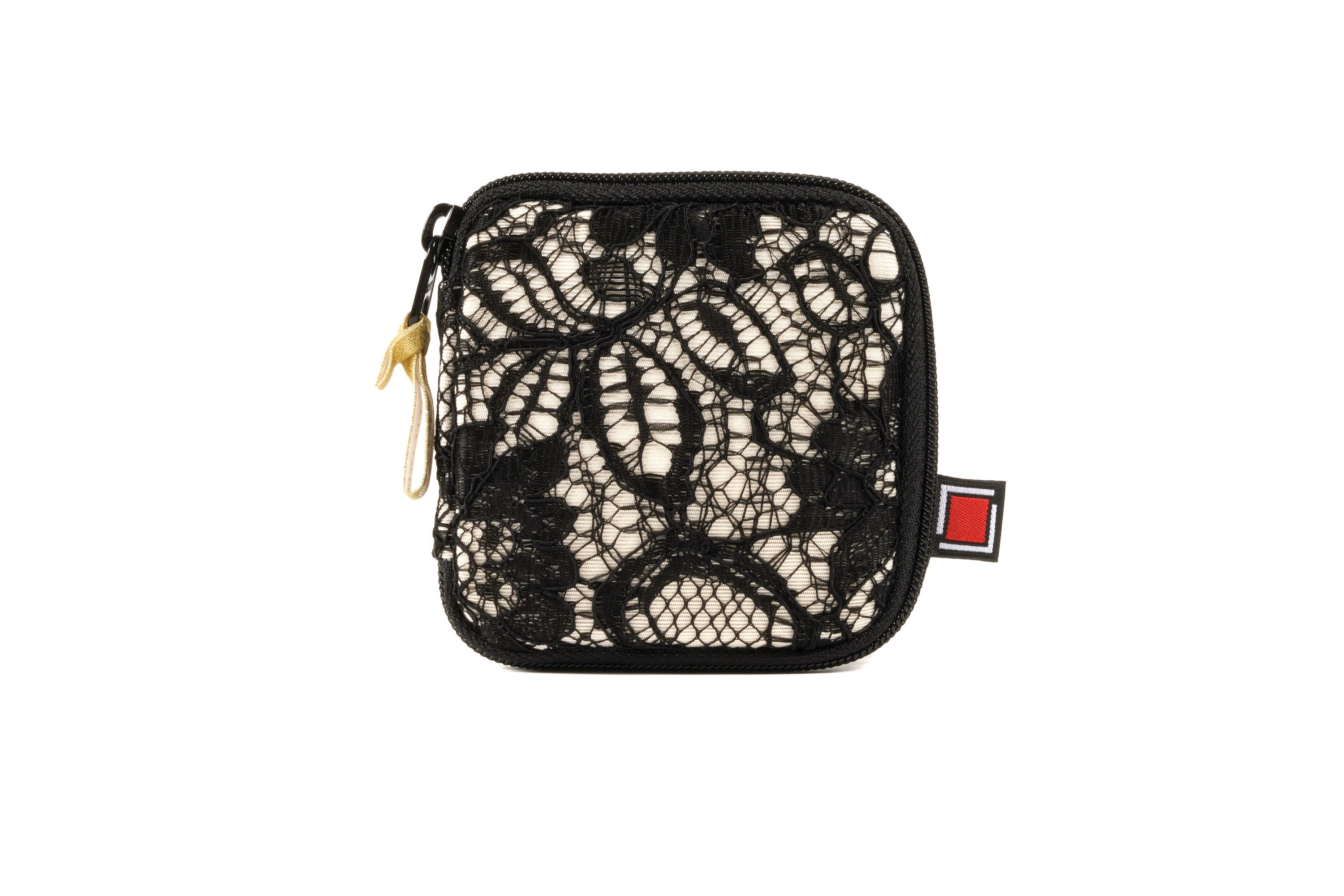
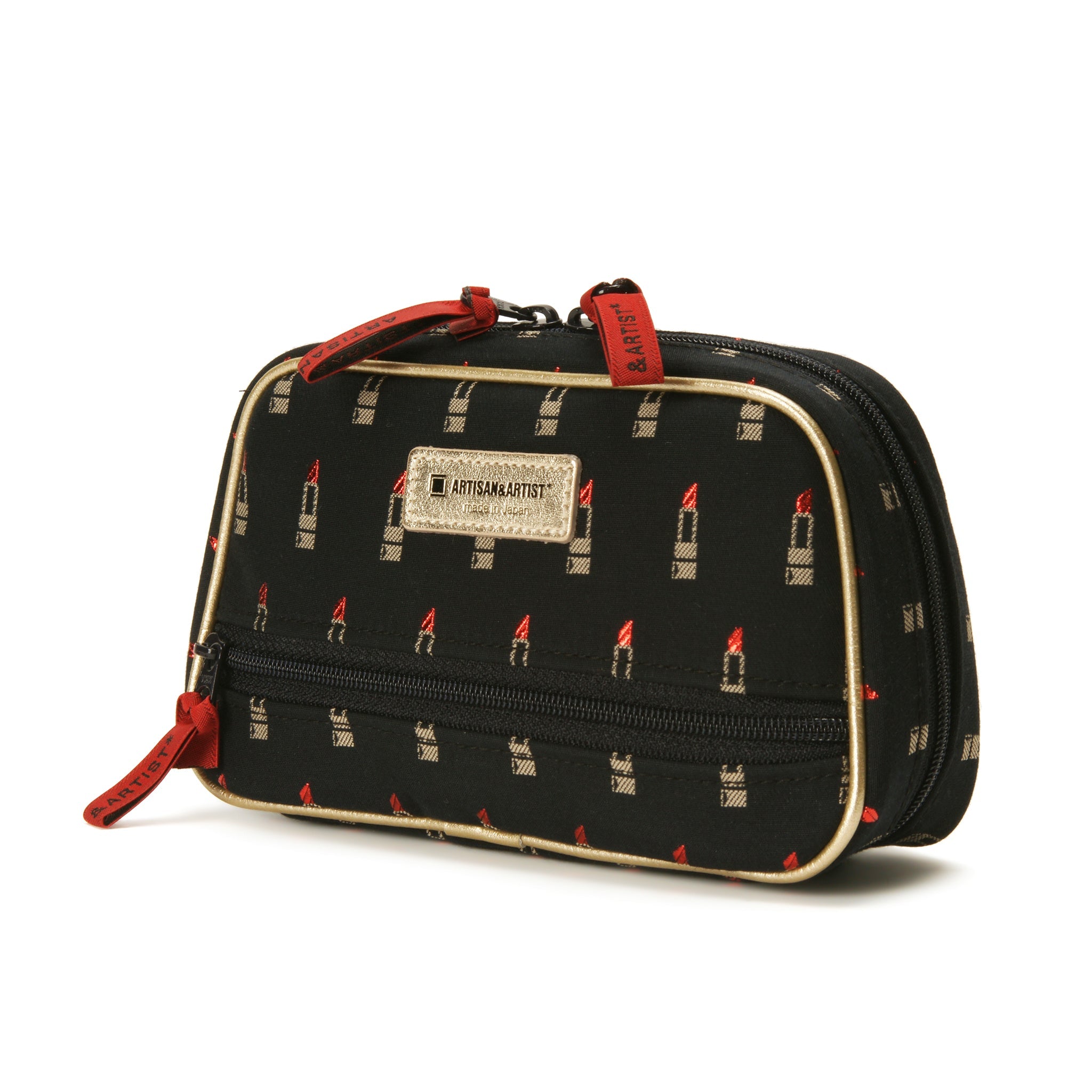
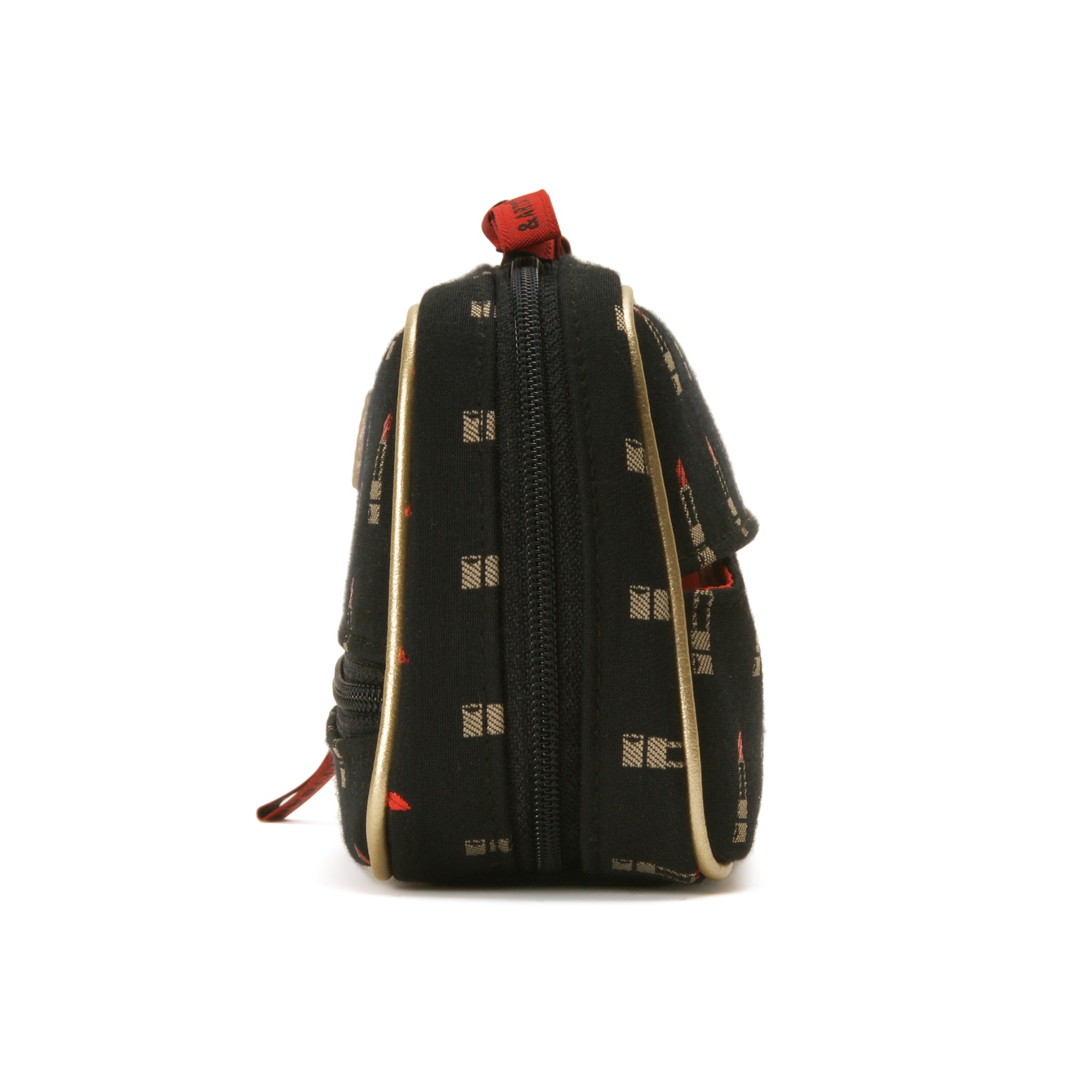
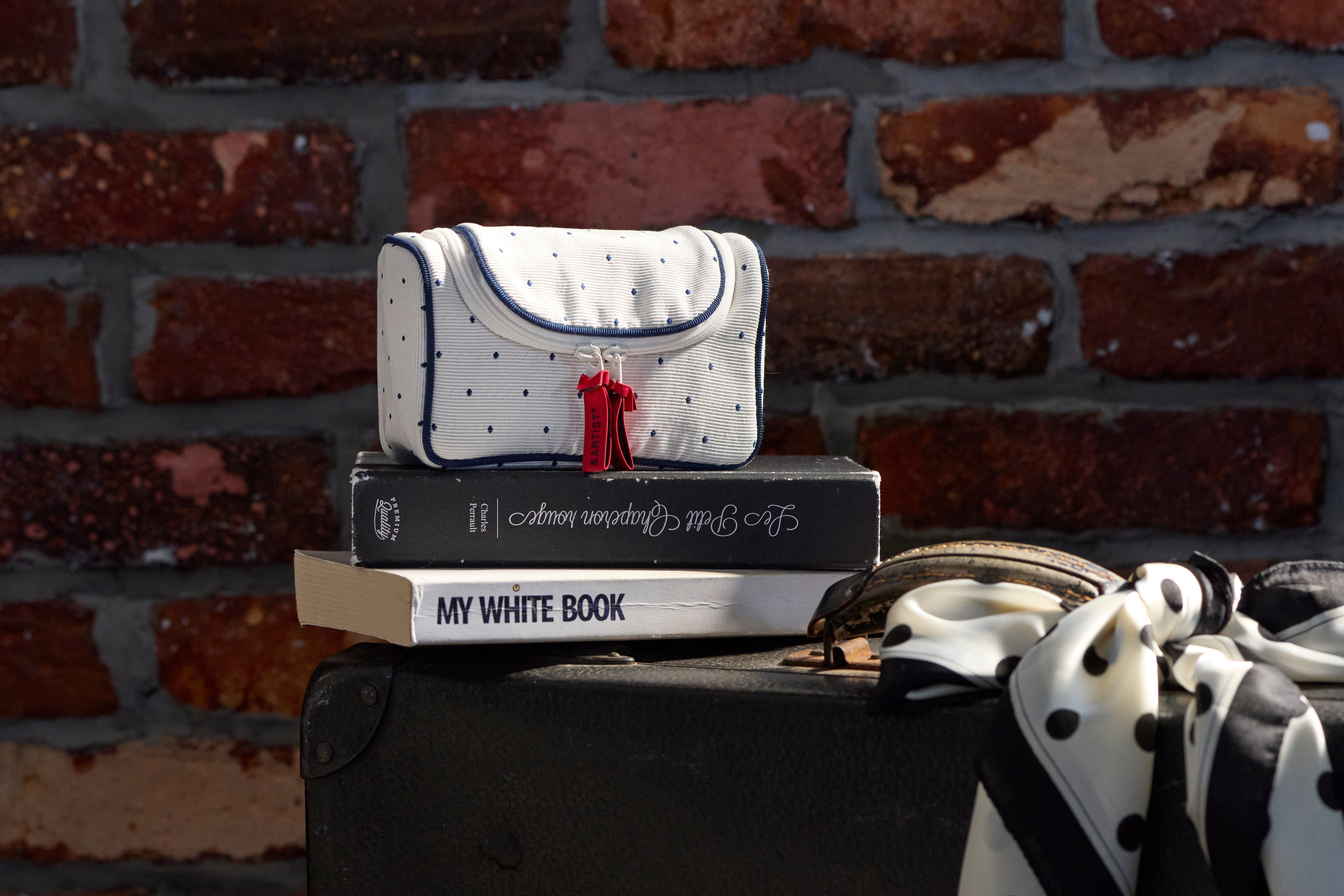
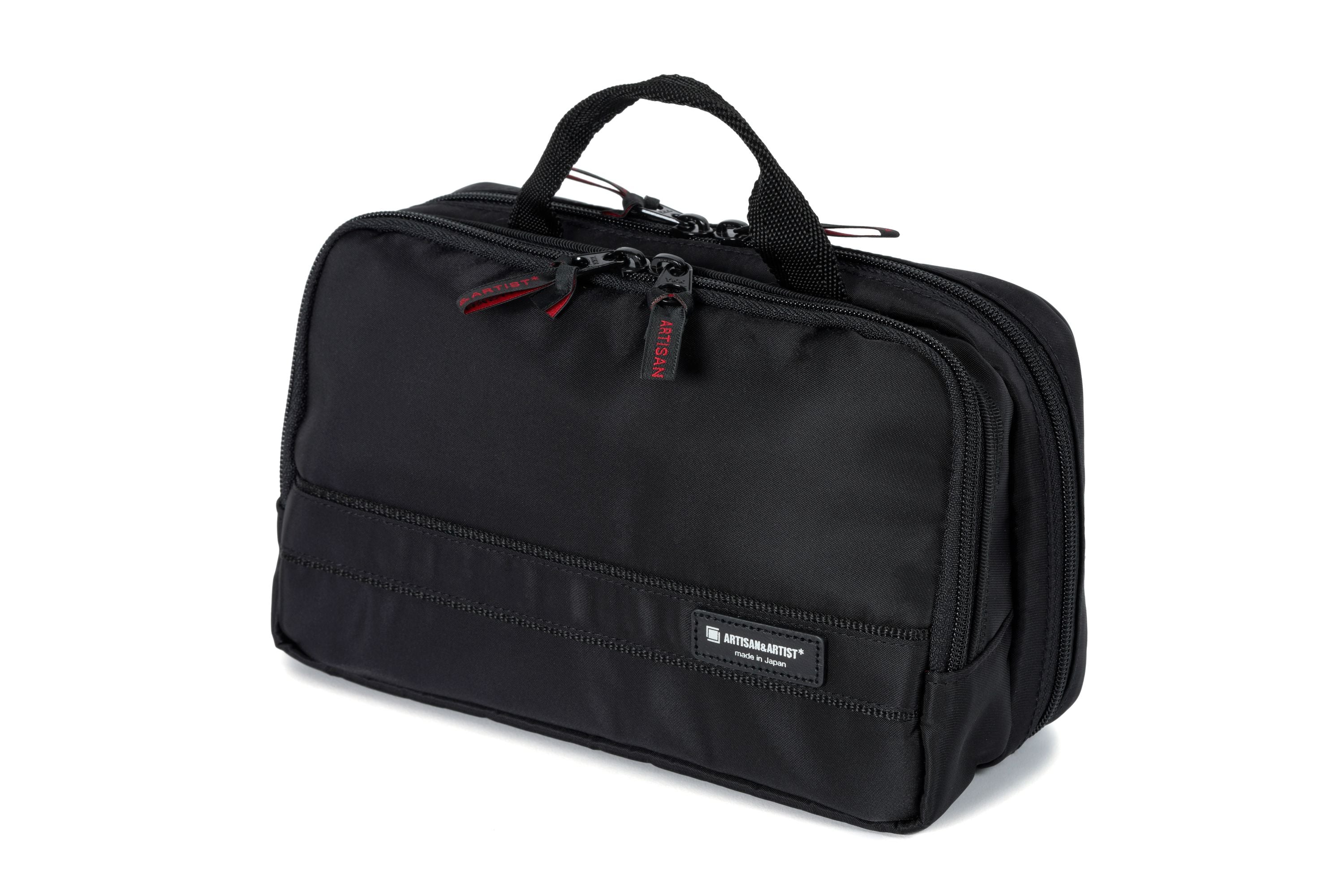
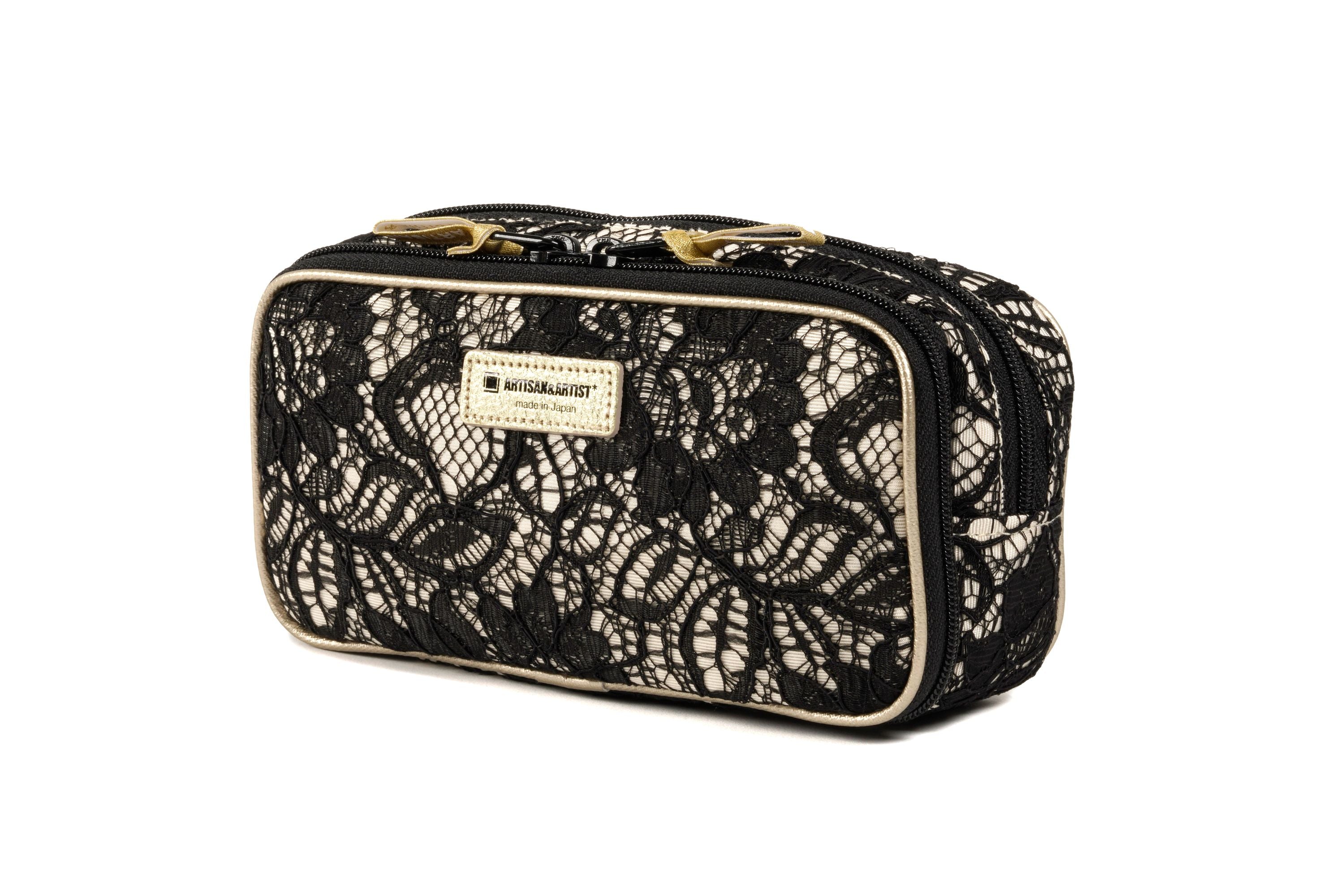
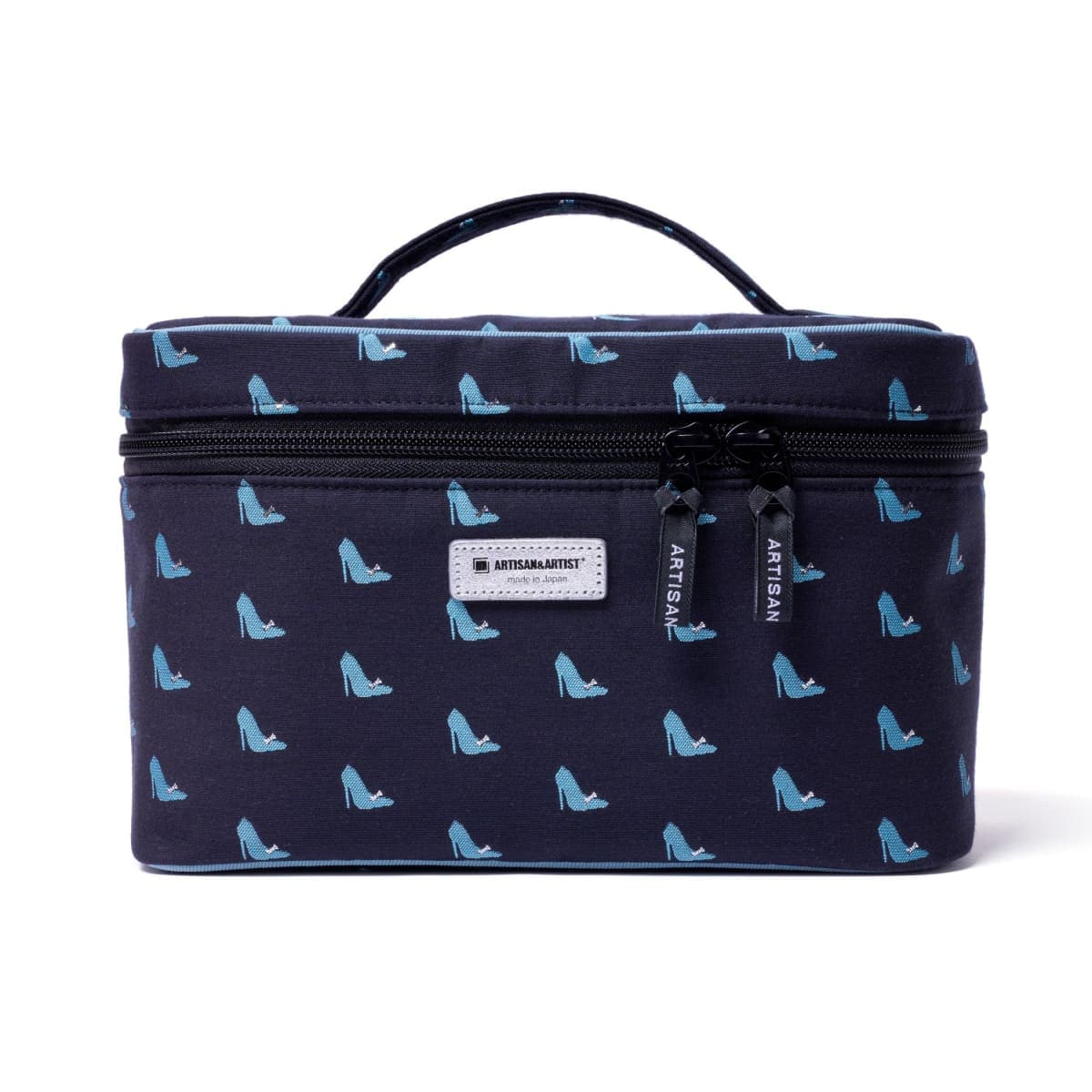
For travelers who want their non-liquid hair essentials, a shampoo bar, a powder dry shampoo, a small styling tool, kept separate from the quart bag and genuinely easy to access, the [Classic Monotone Large Slope Shape Makeup Bag (CM120)] is the organizer built for exactly that.
The diagonal slope construction is the key detail: the moment you unzip it, the front half tilts forward, presenting everything inside on an immediate, easy-to-see viewing plane. No digging, no unpacking on the security floor. The second compartment with wide bottom gussets handles the larger items: a full-size bottle headed into checked luggage, a travel hair tool, anything that doesn't need to come out at the checkpoint at all.
Champagne gold exterior with intricate matte black lace detail, Japanese-made, and structured enough to hold its shape inside a suitcase without collapsing. It weighs almost nothing. It's the kind of object that makes the packing ritual feel considered rather than reactive.
 One bag that keeps your checkpoint items clean and your solid essentials protected. Once you've packed this way, going back to a single overstuffed toiletry bag feels like a step backward.
A Note for International Travelers
The 100ml liquid rule is not unique to TSA. It applies in largely the same form across the EU, UK, Canada, Australia, Japan, and most of Southeast Asia, which means the carry-on system you build for US travel translates almost everywhere. One difference worth knowing: certain airports, particularly in Europe and the Middle East, apply secondary security checks at the gate for specific routes.
These checks follow the same liquid rules but are sometimes more strictly enforced than the main checkpoint. If you're transiting through a hub like Dubai, Heathrow, or Frankfurt, keep your quart bag accessible all the way to boarding, not just through the first checkpoint.
For makeup and cosmetic-specific carry-on rules, see [Flying With Makeup? A Quick Guide to TSA & Packing].